|
|
13.2.1 Compliance is checked by the following test:$ r4 e& S* R: n* L4 a+ }" Q
The test is not made on parts of ceramic material or on insulation of wiring.. l1 k* D; c7 f" p5 _# Y# }) }
The test shall be made in a heating cabinet having a temperature 25 °C ± 5 °C in excess of the* X1 A3 [- X, I: g8 f1 @ C
operating temperature of the relevant part determined during the temperature test (normal& R* ]- }+ `# q, T
operation) of Section 12, with a minimum temperature of 125 °C when parts retaining currentcarrying) _) q( `* h% s7 K5 c, b) H
parts or SELV parts in position are tested, and 75 °C for other parts.* l$ f7 A l9 O9 r! K/ h
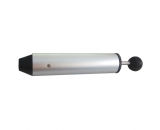
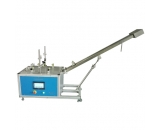
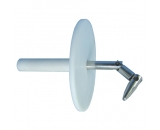
The surface of the part to be tested shall be placed in the horizontal position and a steel ball of- h0 N; H: R0 }, Q9 J* N7 b
5 mm diameter pressed against this surface with a force of 20 N. A suitable apparatus for this
+ F- e% P4 K9 Z: z9 r2 |2 Jtest is shown in Figure 10. If the surface under test bends, the part where the ball presses6 v, H5 `* v2 W9 s
should be supported.
& h, C! U7 s {8 ~: {After 1 h, the ball shall be removed from the sample, and the sample shall be cooled by( r: Y# o' K% _6 r: A# V( F" [
immersion in cold water for 10 s. The diameter of the impression shall be measured and shall
f, n" r$ Z( \1 m( B, Mnot exceed 2 mm. |
|
 /1
/1 
 |关于安规|小黑屋|安规QQ群|Archiver|手机版|安规网
( 粤ICP13023453-10 )
|关于安规|小黑屋|安规QQ群|Archiver|手机版|安规网
( 粤ICP13023453-10 )


 窥视卡
窥视卡 雷达卡
雷达卡 楼主
楼主

 显身卡
显身卡 发表于 2012-3-9 11:27


